
Short answer: yes, if you drive, spend time at the beach or near water, or find bright glare tiring. Polarized lenses block the horizontal glare that bounces off roads, sea and windscreens. They are not the same as UV protection, so a good pair should be both polarized and UV400.
What polarization does
Light reflecting off flat surfaces such as roads, water and car bonnets becomes mostly horizontal. A polarized lens has a filter that blocks that horizontal light, so glare drops sharply while the rest of the view stays clear. Colours look richer and your eyes work less to cope with the glare.
When polarized lenses are worth it in Sri Lanka
- Driving: less glare from the road and from other cars’ windscreens on bright days.
- Beach and coast: sand and sea reflect strong light; polarization cuts the glare that makes you squint.
- Boat trips, fishing and water sports: you can see into the water instead of the reflection on it.
- Long days outdoors: less squinting and less eye strain.
When you might not need them
- Mostly indoors or in the city, where a good UV400 tinted lens is enough.
- If you read a lot of screens outdoors: some phone, car and ATM screens look dark at certain angles through polarized lenses.
Polarized is not UV protection
Polarization handles glare; UV protection handles invisible UV light. They are separate. Always check for UV400 or 100% UVA/UVB as well.
How to check a lens is really polarized
Look at a phone or laptop screen through the lens and slowly tilt your head (or the glasses) by about 90 degrees. With polarized lenses the screen darkens noticeably at one angle. If nothing changes, the lens is probably not polarized.
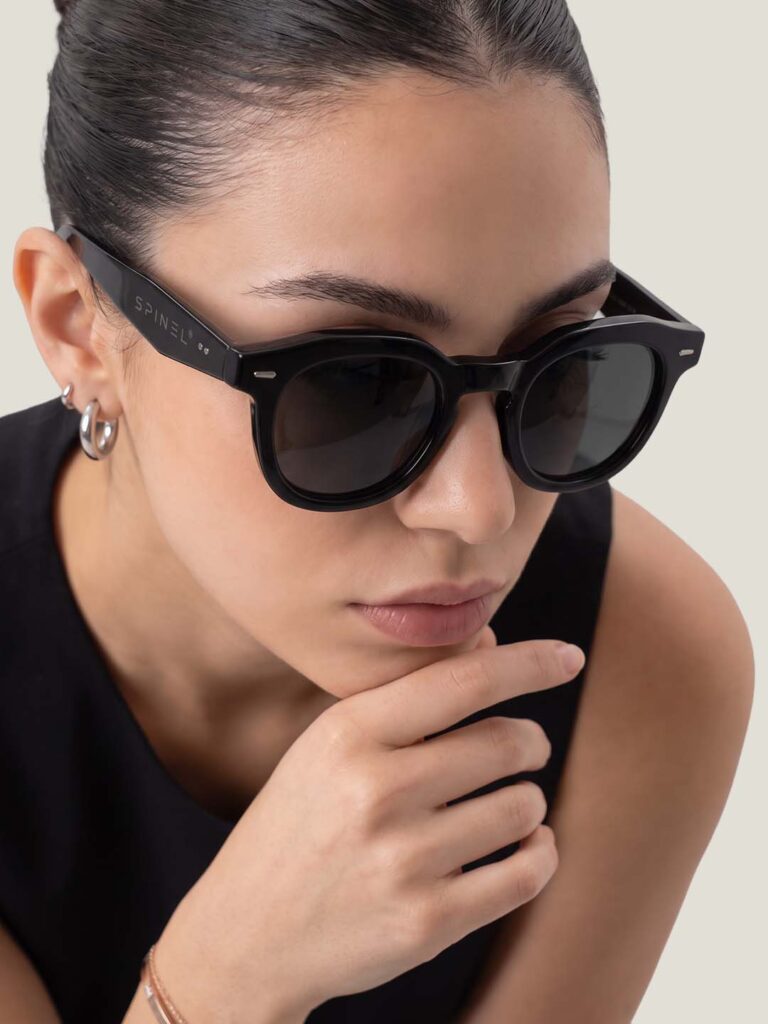
Polarized sunglasses from SPINEL
- Midnight Fade: Italian acetate, polarized midnight-tint lenses, full UV protection. Also in Translucent, Lush Green and Tortoise.
- Amber Fade: polarized lenses in a warm gradient design with UV protection.
Island-wide delivery in Sri Lanka, card or cash on delivery, 1-year warranty. See all SPINEL sunglasses →